Updates

Built to Last: How to Choose Column Pipes That Survive Every Harvest
For any farmer or agricultural professional, water is the lifeblood of the field. However, the efficiency of an irrigation system is only as strong as the pipes that support it. When dealing with submersible pumps and deep-well systems, UPVC column pipes are the unsung heroes that ensure water reaches the surface, season after season.
Choosing the wrong pipe doesn’t just lead to a leak; it can lead to pump failure, expensive repairs, and lost crop yields. Here is a comprehensive guide on how to select column pipes that are truly built to last.
1. Prioritize Material Integrity (UPVC)
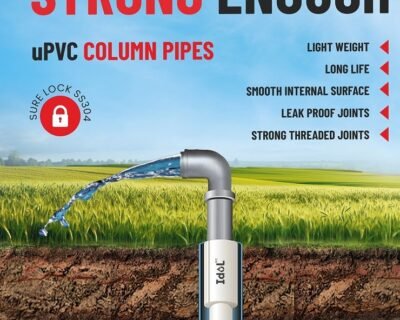
The shift from traditional metal pipes to UPVC (Unplasticized Polyvinyl Chloride) has revolutionized agricultural plumbing. Unlike galvanized iron (GI) pipes, high-quality UPVC is:
- Corrosion-Proof: It won’t rust when exposed to minerals in groundwater.
- Chemical Resistant: It remains stable even when fertilizers or pesticides are present in the soil.
- Smooth Internal Surface: This reduces friction, meaning your pump doesn’t have to work as hard, which saves electricity.
2. Understand Pressure Ratings and Depth
Not all column pipes are created equal. The deeper your borewell, the higher the hydrostatic pressure the pipe must withstand. When selecting your pipes:
- Check the Class: Ensure the pipe is rated for the specific depth of your submersible pump.
- Safety Factor: Look for pipes with a high safety factor to handle sudden pressure surges during pump start-ups.
- Size Range: Depending on your water requirements, ensure the brand offers a range from 1 inch to 6 inches to maintain consistent flow rates.
3. Focus on Joint Strength and Threading
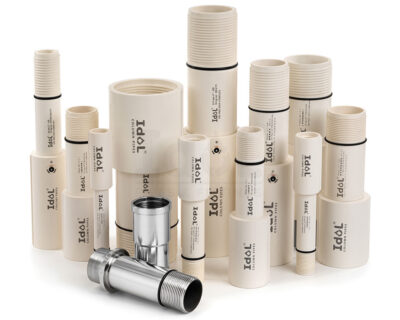
The joint is often the weakest point of any column pipe. Because these pipes must support the weight of the submersible pump and the entire column of water, the threading is critical.
- Square Threads: High-tensile square threads provide a much stronger grip and prevent the pipes from slipping or “pulling out” under heavy loads.
- Sealing Rings: Look for pipes that utilize high-quality EPDM rubber rings. These ensure a leak-proof joint that stays airtight even under high-pressure conditions.
4. Weather and Environmental Resilience
Agricultural pipes are often stored outdoors or exposed to varying temperatures. A pipe that is “engineered to outlast every season” must be UV-stabilized. This prevents the material from becoming brittle when exposed to sunlight, ensuring the pipe remains flexible and strong for decades.
5. Ease of Installation and Maintenance
Time is money during the planting season. UPVC column pipes are significantly lighter than metal alternatives, making them:
- Easier to Transport: Lowering logistics costs.
- Faster to Install: Reducing the manual labor required to lower or pull up the pump for maintenance.
- Maintenance-Free: Once installed, a high-quality UPVC system should require zero upkeep for years.
While it may be tempting to cut costs on plumbing materials, the “cheapest” pipe is often the most expensive when it fails mid-season. Investing in durable, high-performance column pipes ensures that your irrigation system remains reliable, protecting both your pump and your harvest.